Skip to content

Property discovery beyond paid visibility

I led the design of Yaca Properties, a property-discovery and agency platform in Portugal. Over 2.5 years, I connected marketplace rules, neighborhood information, and front-end behavior around a practical question: how can independent agencies be discovered without asking buyers to work harder?

Executive Summary

Private Partner Beta

Problem
Independent agencies are trapped in paid-visibility bidding wars, while homebuyers struggle to evaluate neighborhood context across scattered tabs.
Role
Product & Design Lead (Solo Product Designer & Design Engineer).
Platform scope
Agency onboarding & feed sync (B2B SaaS), responsive map search & listing details (B2C), and contextual buyer inquiries.
Target market
Local and independent real estate agencies in Portugal, and the buyers and renters considering their listings.
Current status
In active testing with pilot agencies across Portugal. Validating feed reliability and onboarding flows ahead of public launch.
Duration
2.5 years of active 0-to-1 development, leading product and design alongside engineering.
1Market loop

The Broken Market Loop

In conversations with five independent agency brokers across Porto and Lisbon, the recurring concern was that publishing was only the first cost. Staying visible often meant paying repeatedly.

That changes what a smaller agency is competing on. Accurate information, good photography, and local expertise do not necessarily buy the same prominence as a larger marketing budget. Franchise networks can spread those costs across a larger operation; an independent agency has less room to keep paying for position.

The interviews also surfaced poorly contextualized inquiries, concerns about the portal overshadowing the agency's own brand, and unease about portals moving into adjacent services such as mortgage intermediation. I used these findings to define the platform's boundaries, rather than turn every concern into another feature.

Two models of property discovery

Status quo: Paid visibility

The pay-to-play loop

Dominant portals turn publishing and prominence into separate costs.

  1. 1Pay to publish

    A recurring subscription is required just to list the agency’s inventory.

  2. 2Pay for prominence

    Idealista publicly sells owner promotion (such as monthly highlights and 24-hour boosts), while professional agency packages are negotiated separately behind closed doors.

  3. 3Outspent by franchises

    Large networks can spread promotion budgets across more agents, leaving independents competing on spend.

  4. 4Visibility decays

    Listings slip as other adverts move ahead. Staying visible means another round of paid promotion.

After visibility decays, the cycle returns to step 2: pay for prominence.

A recurring spend cycle that puts smaller agencies under pressure.

Our approach: Merit-based discovery

Relevance over marketing budget

The Yaca Properties model, currently in live partner testing.

  • Predictable flat pricing

    A transparent fee per active listing. No paid boosts, bidding wars, or hidden visibility tiers.

  • Testing ranking rules

    We are testing ranking rules based on listing completeness and agency-supplied photography. Agencies cannot buy a higher position.

  • AMI-licensed agencies

    Official Portuguese AMI licensing provides the verification basis, with the agency’s identity kept visible.

  • Context-rich leads

    Neighborhood information from Yaca Places is designed to help buyers assess a home before they inquire.

A level playing field for independent and boutique agencies.

Pricing reference: Public rate structures from Idealista (2026).

2Social context

Designing in a Housing Crisis

Housing demonstrations across Lisbon, Porto, and European capitals have brought affordability, displacement, and speculative pressures into public view. In a stressed market, property discovery software carries ethical weight: portals often profit from manufactured urgency and treat homes as detached speculative assets.

  • 1 // ACCOUNTABILITY

    Curbing Phantom Listings

    Requiring an official Portuguese AMI license makes agency identity verifiable and helps screen out unlicensed intermediaries, creating an accountability check against ghost adverts.

  • 2 // ETHICS

    No Manufactured Urgency

    Eliminated sprint countdowns, artificial bidding alerts, and FOMO triggers designed to turn housing anxiety into commercial leverage.

  • 3 // NEIGHBORHOOD CONTEXT

    Anchored in Neighborhoods

    Homes are evaluated alongside local transit, public services, and daily rhythms (via Yaca Places), rather than as isolated financial yields.

Context sources:Euronews (Housing protests in Portugal)IMPIC (Official agency register)

3Product strategy

Change what discovery rewards

We framed Yaca Properties around two connected needs: agencies need a credible way to publish without buying visibility, and buyers need neighborhood context to evaluate a home. Here is how those principles shaped the product:

  • 1 // COMMERCIAL MODEL

    A Clear Publishing Cost

    A flat monthly fee per active listing. Zero paid boosts, no bidding wars, and no artificial decay to force upgrades.

  • 2 // SEARCH ALGORITHM

    Credibility Before Prominence

    We are testing ranking rules based on listing completeness and agency-supplied photography. Agencies cannot buy a higher position.

  • 3 // BRAND EQUITY

    Agency Identity Stays Visible

    Agencies keep their branding, colors, and direct buyer relationships rather than being swallowed as anonymous portal inventory.

4Engineering architecture

Engineering State & Performance

PERFORMANCE & NETWORK

Decoupled Map & Batch Loading

The friction
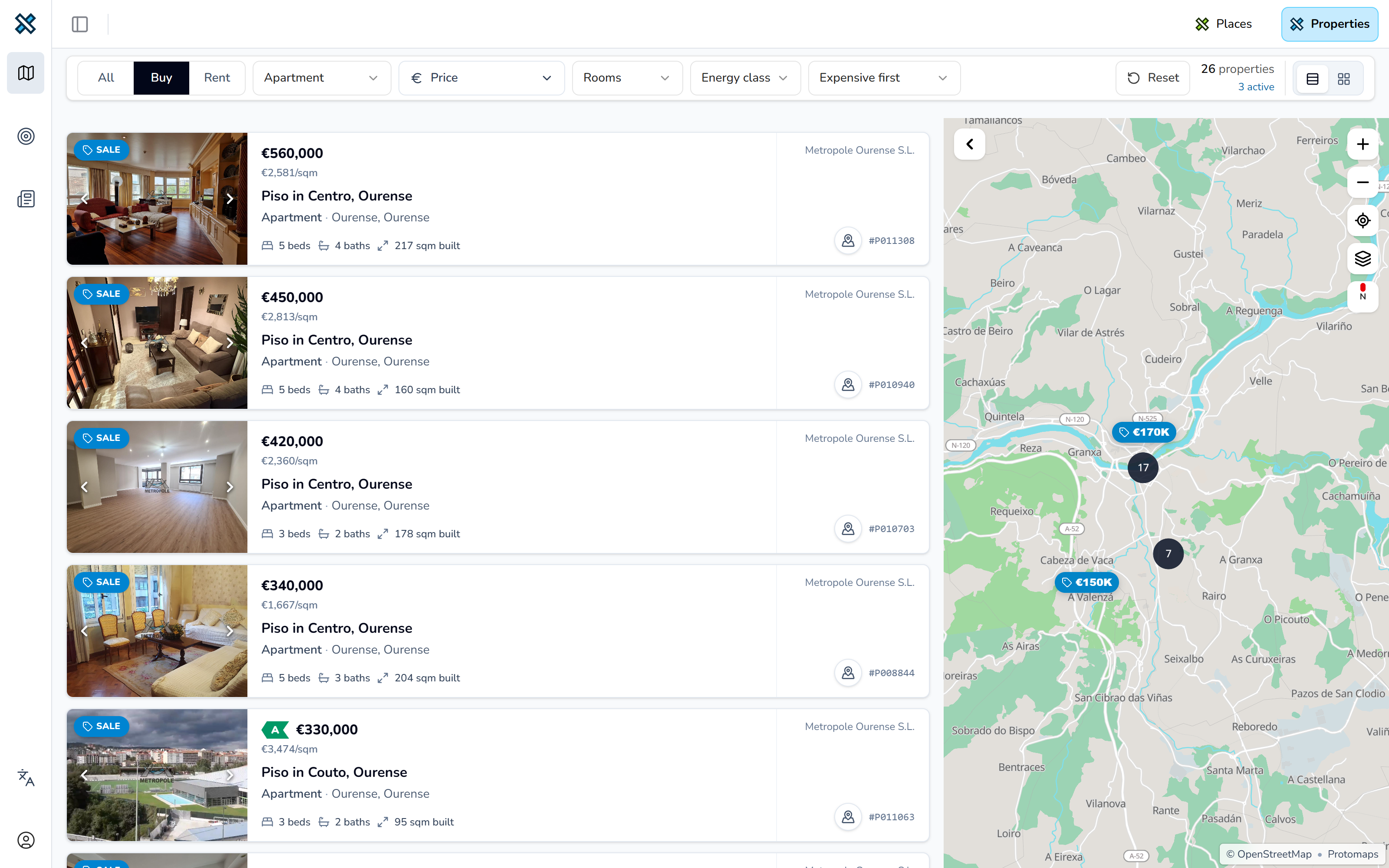
An endlessly growing results feed retains more cards and downloads more data. Re-fetching map data with every batch adds unnecessary network and rendering work.
The engineering solution
Map and listing queries are separate. includeMapItems: false fetches the next batch of cards without requesting map data again.
The UX trade-off
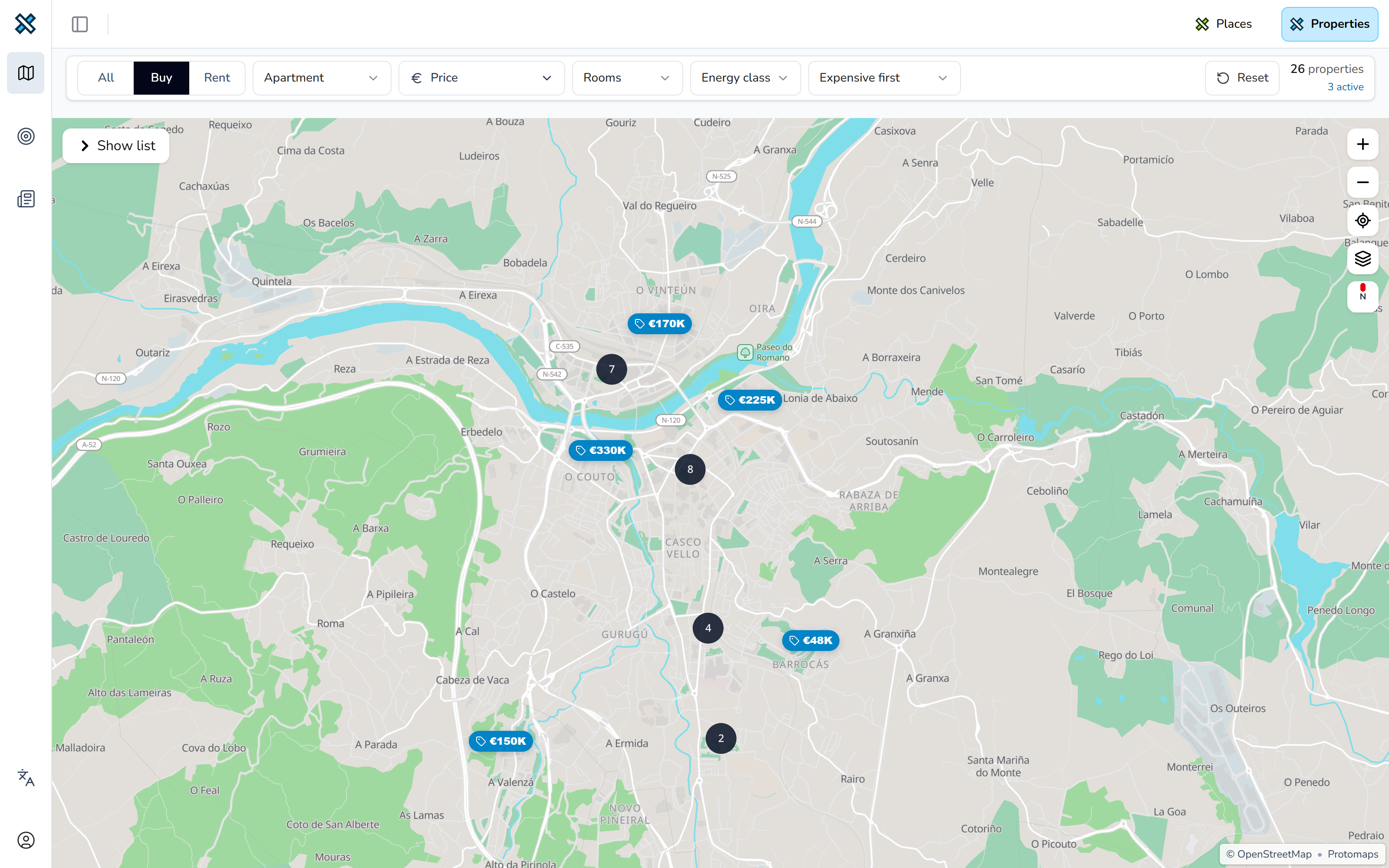
An explicit Load more action gives buyers control over when more results arrive while keeping the current search area in place.

STATE & NAVIGATION

Preserving Search State Across Routes

The friction
Opening a property and returning should not reset the search area or active filters. Losing that context makes the buyer repeat work they have already done.
The engineering solution
Committed bounds and active filters live in the URL query string; the selected property's deep link is handled separately. Desktop uses history.pushState, with separate mobile overlay history handling.
The UX trade-off
More involved history orchestration creates a consistent return path across desktop and mobile, keeping the buyer's search in place.

5Real-world feeds & hierarchy

Adaptive Density: Designing for Real Data, Not Ideal Figma Mockups

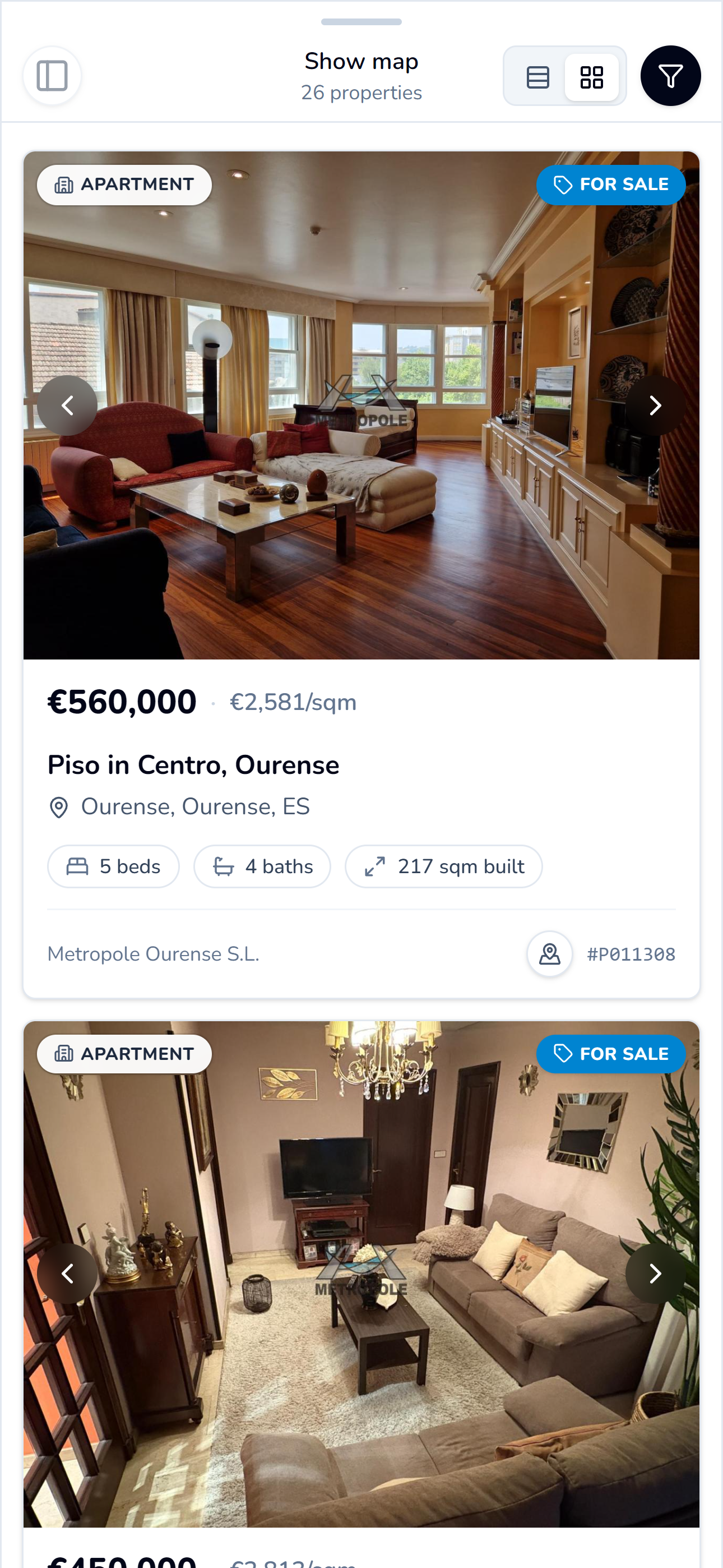
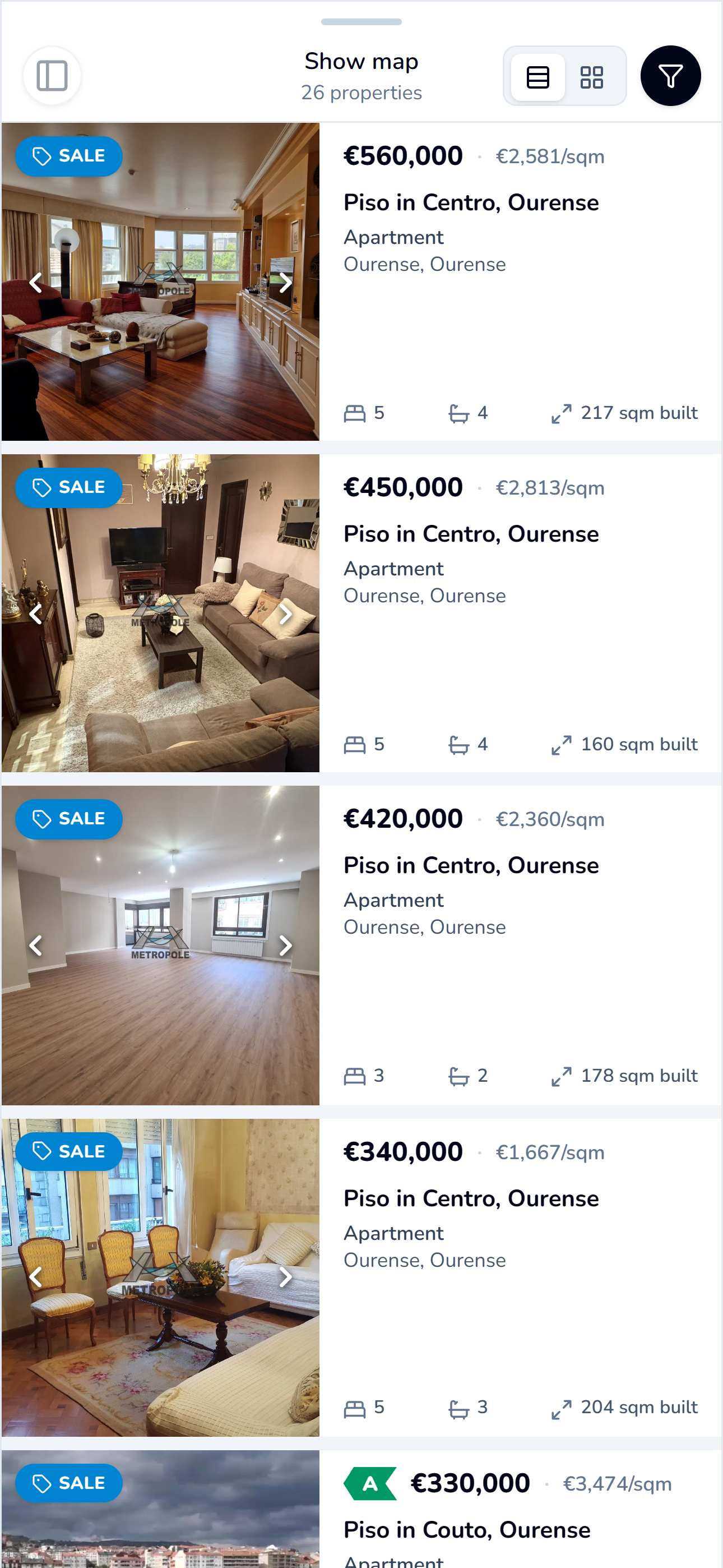
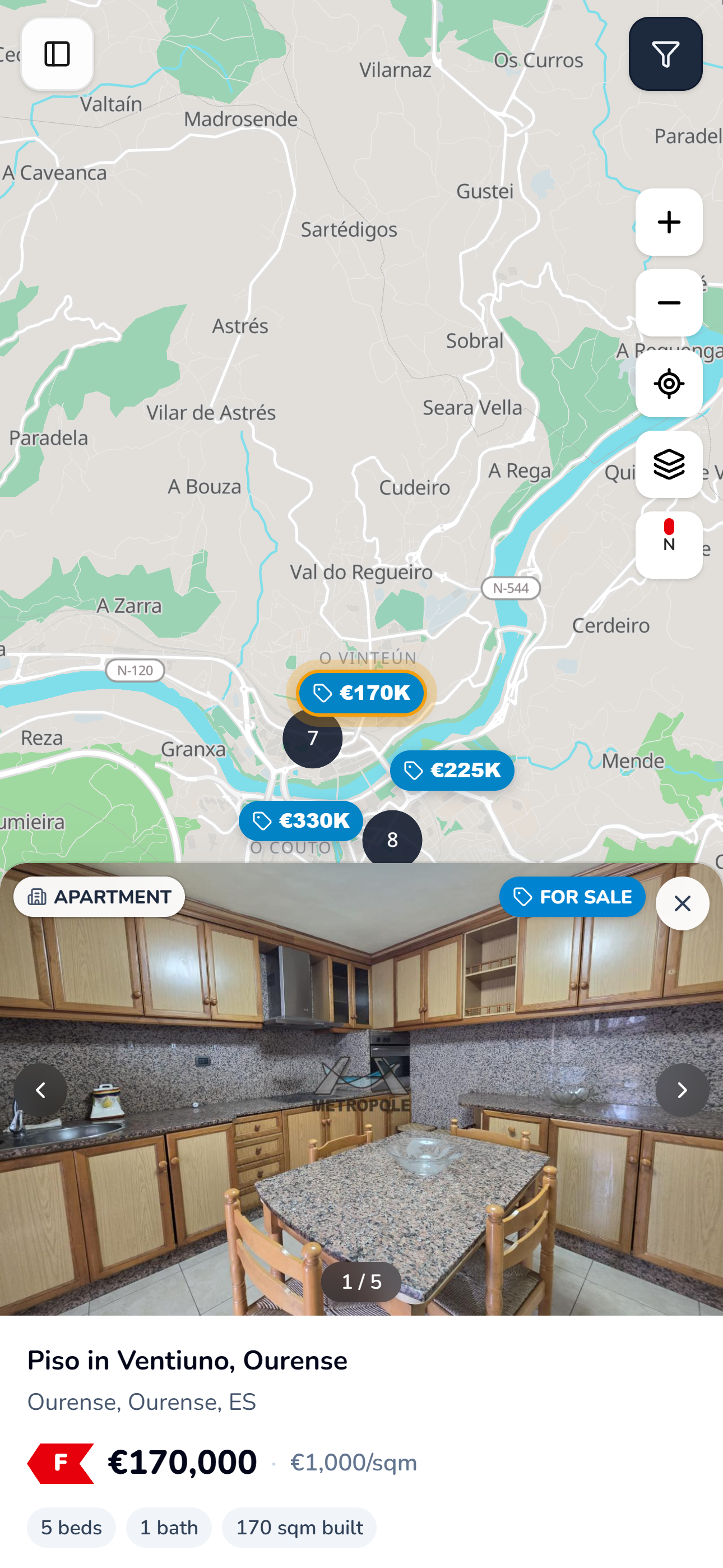
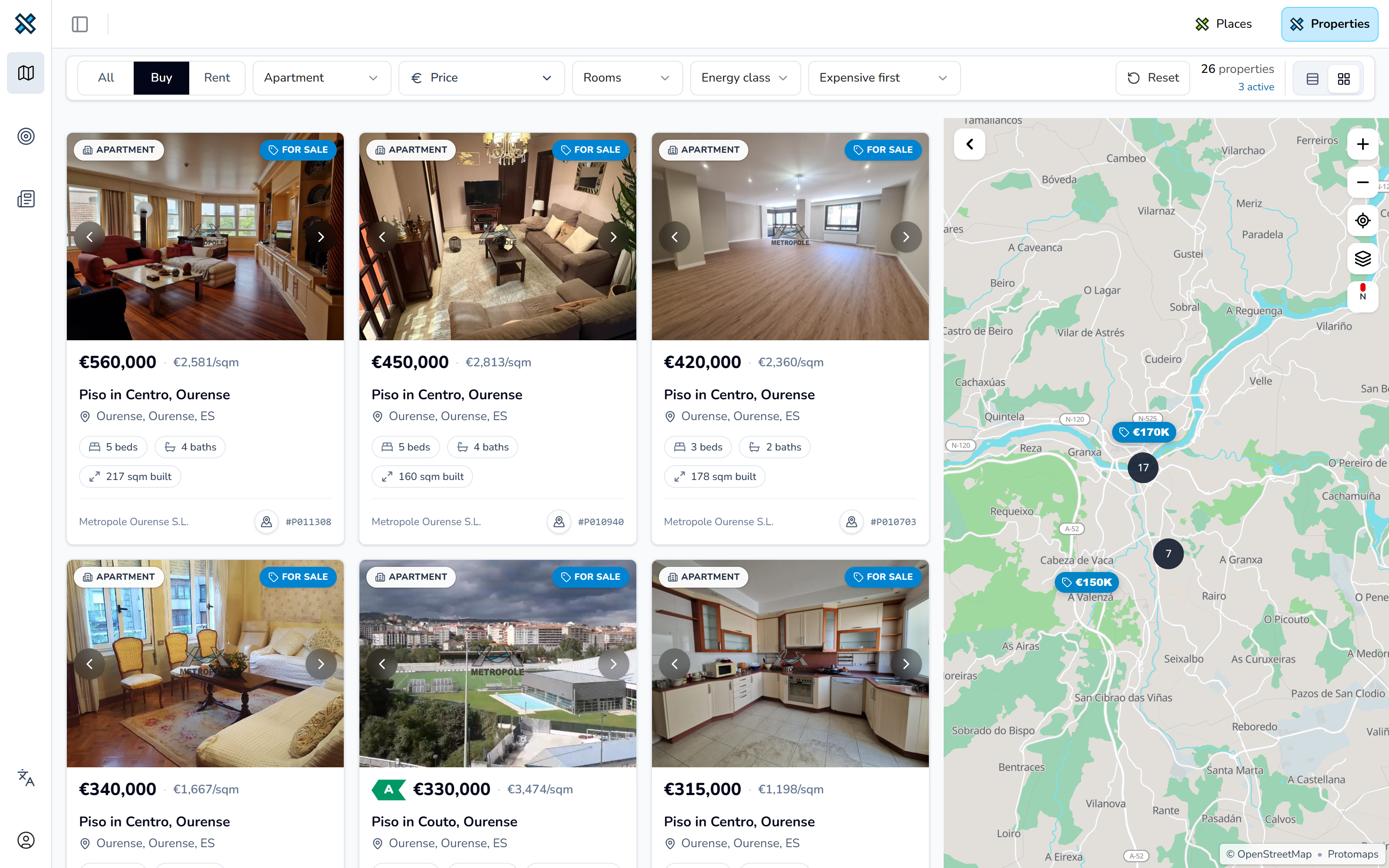
Agency XML/JSON feeds are inherently inconsistent. Missing floor areas, non-standard room counts, long agency names, and mismatched photo aspect ratios were treated as foundational layout constraints, not edge cases left for engineering to patch.

The Ourense examples show interface behavior. Partner testing is taking place with agencies in Portugal.

6Neighborhood context

Connecting the Home to Everyday Life

A home doesn't end at its front door. Daily routines depend on what's around the corner: the nearest market, transit connections, and green space. Without this context, buyers are forced to cross-reference multiple map and transit tabs.

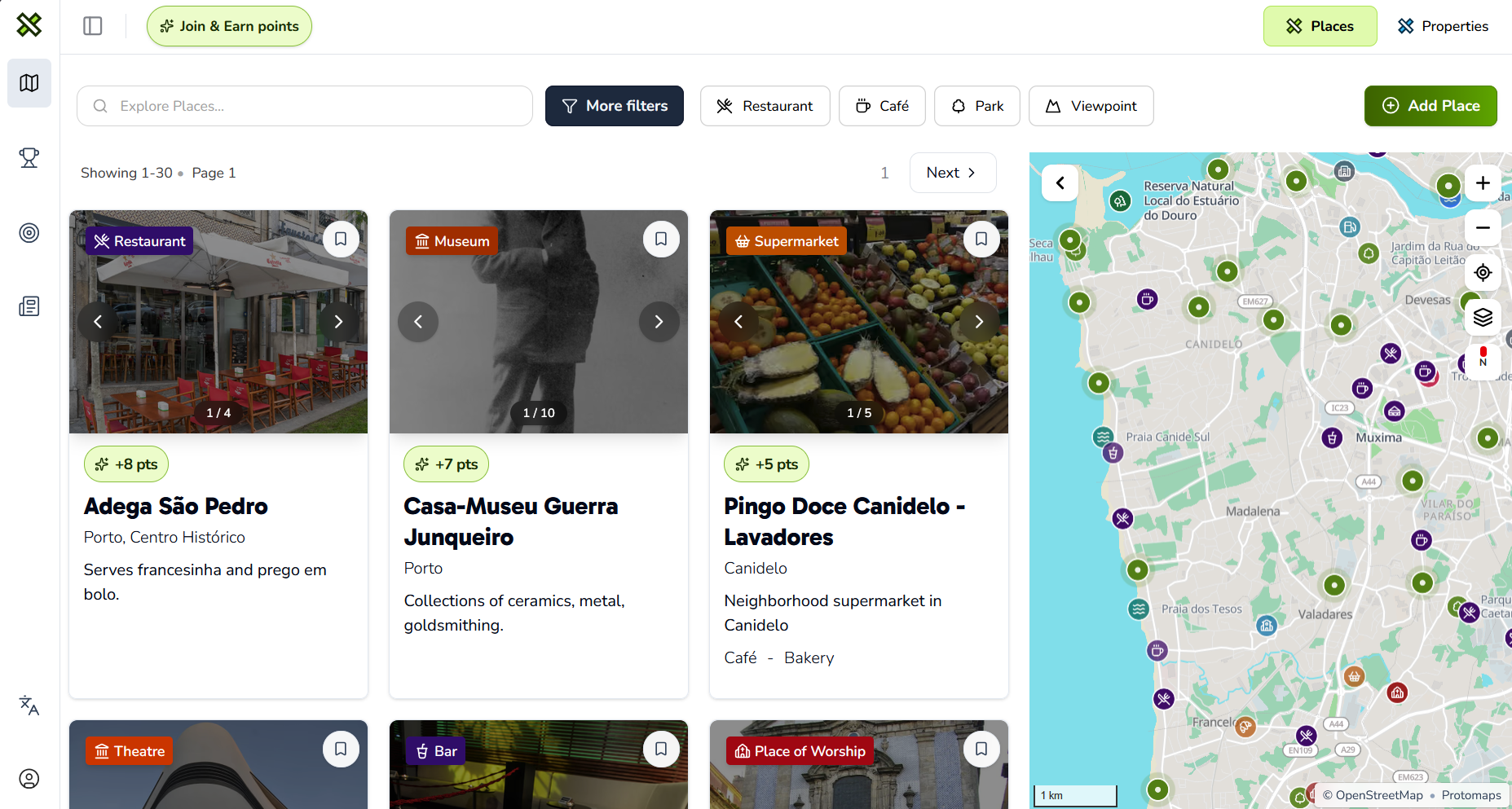
Instead of building a separate amenities layer, Properties directly pulls neighborhood intelligence from our sister community-driven platform, Yaca Places. The listing details lead with property essentials, progressively disclosing local spots as the buyer zooms into daily life.

  • 1 // ZERO REDUNDANCY

    One shared neighborhood database powers both products without duplicate data entry.

  • 2 // CURATED SIGNALS

    Focused on daily necessities (transit, groceries, schools) rather than cluttering the view with 50 generic pins.

  • 3 // PROGRESSIVE CONTEXT

    Neighborhood data appears in context alongside the home specs, keeping the primary listing clean and scannable.

View full size
Yaca Places neighborhood map showing reviewed community submissions
The Yaca Places community-curated dataset supplying reviewed community submissions directly to Yaca Properties listings.

7Partner testing

Testing the product with local agencies

The search and listing experience is currently in live partner testing with boutique agencies across Portugal. We are using these pilots to stress-test real feed imports and observe how buyers evaluate homes in the browser.

Validation matrix

  • 1 // HANDLING MESSY AGENCY FEEDS

    Can an agency publish with confidence?

    Observing how partners navigate auto-imported feeds, resolve missing fields (e.g. unstandardized m²), and verify AMI branding before going live.

  • 2 // MAP-BASED SEARCH

    Can buyers compare without losing their place?

    Testing whether the decoupled map and URL state history eliminate the disorientation and reset loops common on legacy portals.

  • 3 // NEIGHBORHOOD LAYER

    Does nearby context change the shortlist?

    Tracking whether surfacing everyday amenities (via Yaca Places) changes a buyer's decision to bookmark or discard a property.

  • 4 // CONVERSATION QUALITY

    What makes an inquiry genuinely useful?

    Working with agents to identify the exact buyer context (timeframe, readiness) needed to replace low-intent portal spam without adding friction.

8Outcome & Roadmap

What’s shipped and what comes next

1 // Shipped Foundation

A working private beta with agency onboarding, feed imports, map search, and listing details

Yaca Properties establishes the core foundation: onboarding for AMI-licensed agencies, responsive search primitives that handle real-world feed inconsistencies, decoupled map state in the URL, and contextual integration with Yaca Places.

2 // Pilot Milestones

Validating with real agencies

As partner testing wraps with boutique agencies in Portugal, our next milestones focus on measuring feed ingestion speed, tracking inquiry quality against legacy portal spam, and preparing for public beta.