Quitzilla · What I used
Keep a list of reasons
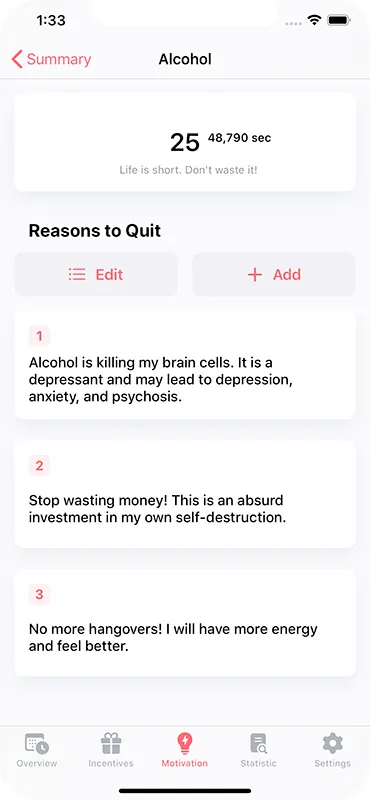
Reasons to Quit gives me an editable list of personal motivations.
I built the CBT-inspired support I felt was missing from other habit-tracking apps. Unloops helps you prepare for triggers, pause when you feel an urge, and reflect after a setback by logging a slip.
Product snapshot:
The starting point
Before building Unloops, I used a paid habit-tracking app to track my progress. But I still needed more support to understand my triggers and choose how to respond to them.
That became the brief for Unloops: prepare for triggers, pause during urges, and learn from setbacks. The approach draws on cognitive behavioral therapy (CBT).
01. Notice and prepare
I needed a response ready before I made the same avoidable mistake again. Something I could actually use to fight it.
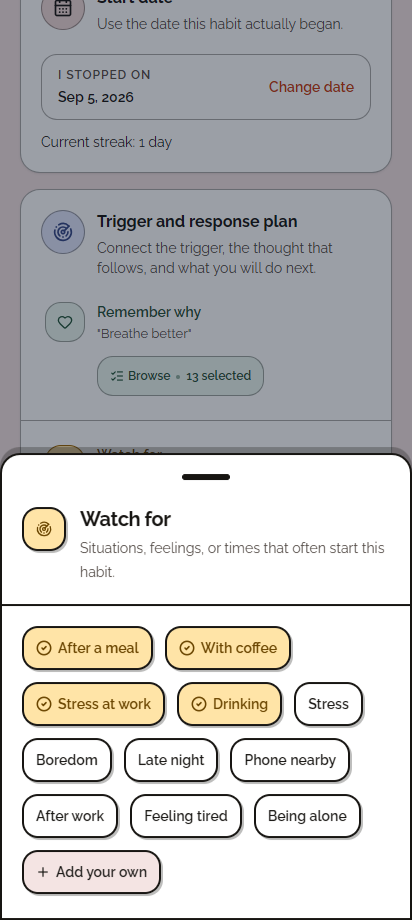
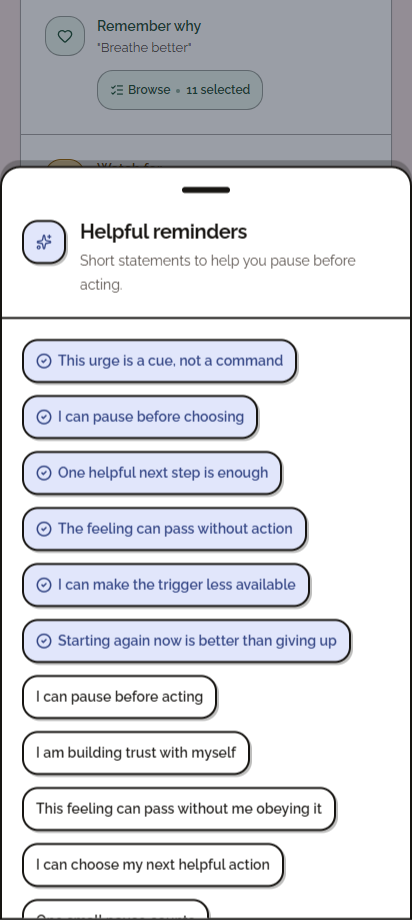
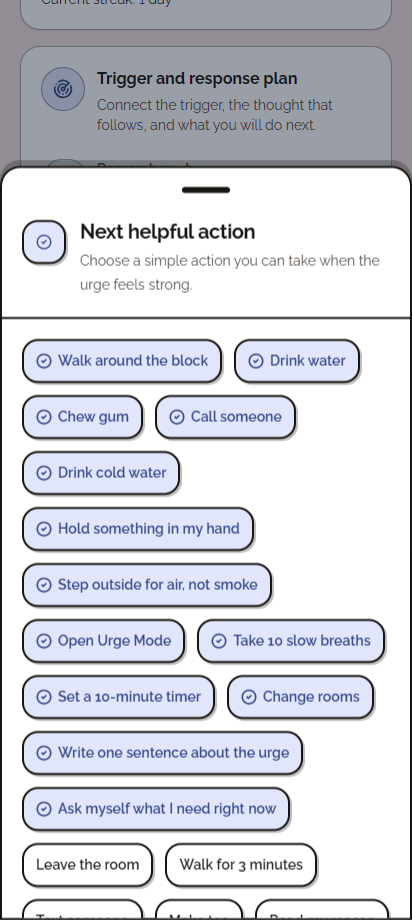
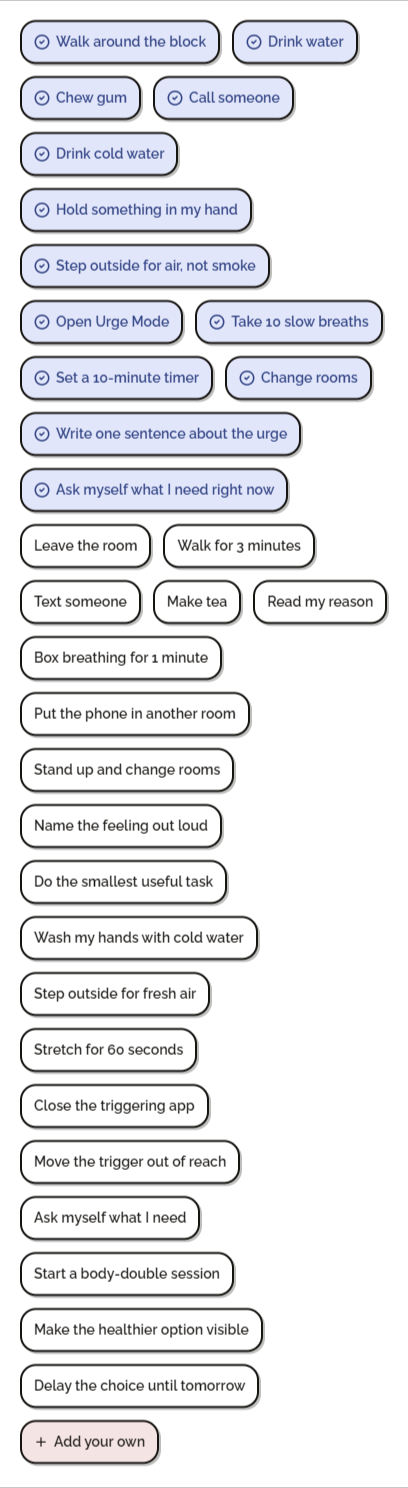
An editable plan connects triggers, helpful reminders, and practical alternatives. Suggestions make setup easier, while personal entries help build a solid plan.
Notice the cue. Choose a small action.

02 · Pause and choose
An urge needed an immediate next step.
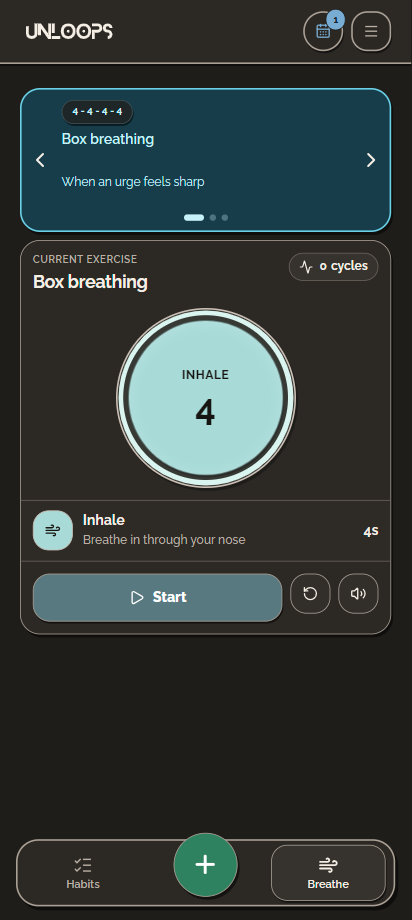
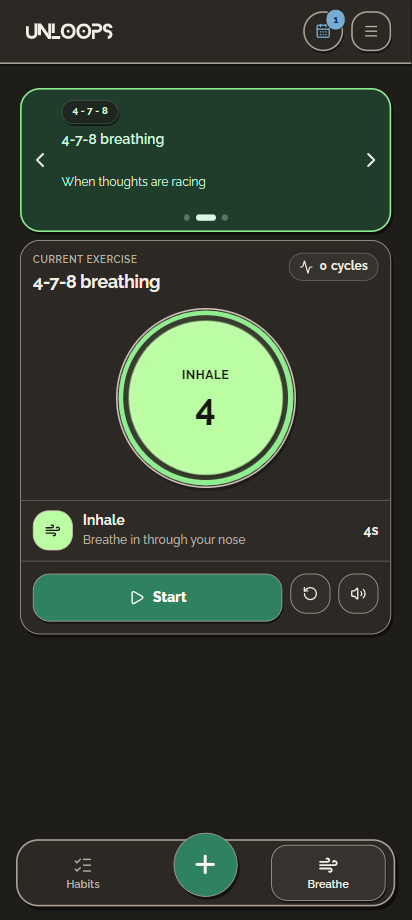
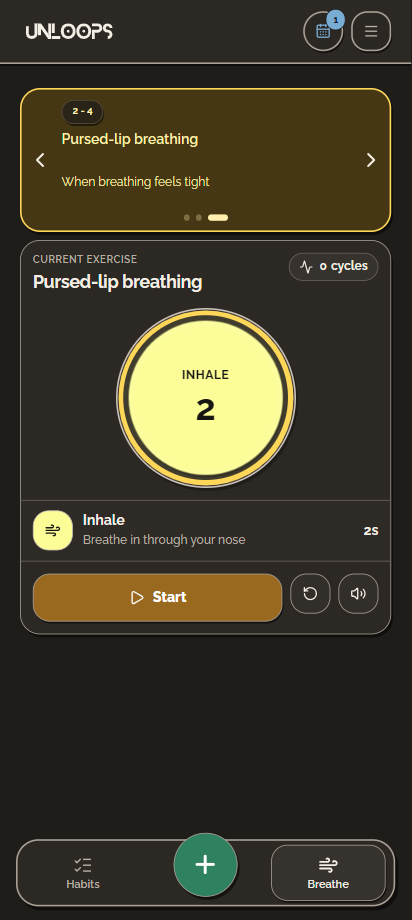
An intensity check opens a timed pause, with a personal reason and alternative action in reach. Breathing is optional.
A final check-in gives the pause a clear end.
How personal reasons connect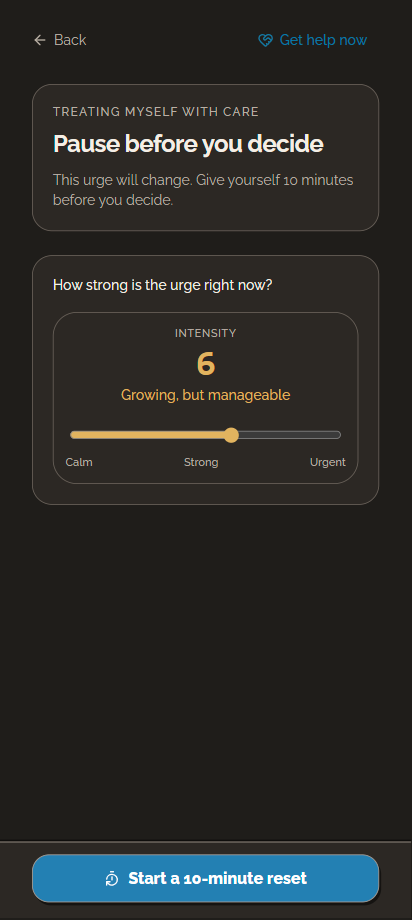
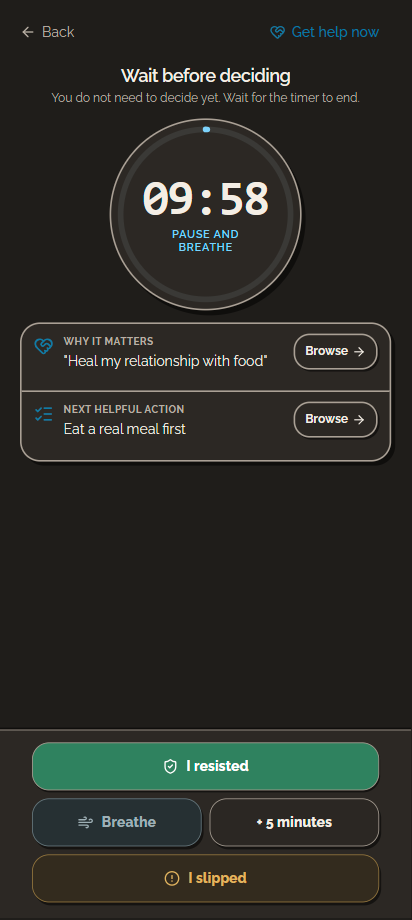
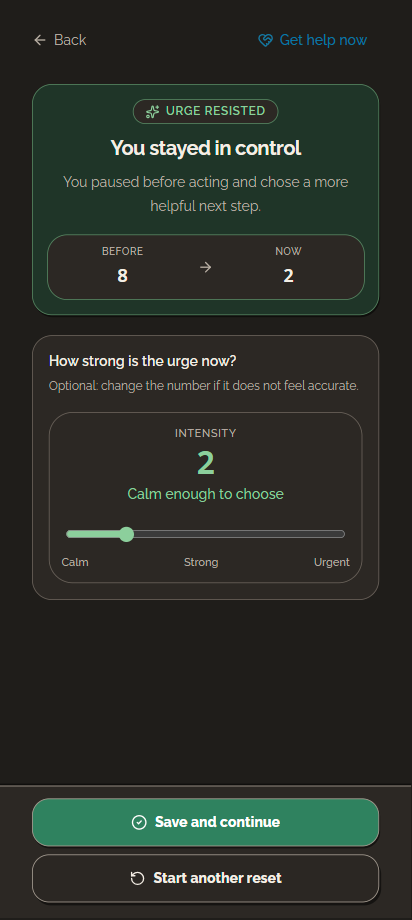
Example ratings from separate captures, not a measured change.
Structured breathing offers optional support during the CBT-inspired pause. Box breathing has been studied for stress management, while NHS guidance includes 4-7-8 for relaxation and pursed-lip breathing for breathlessness.
03 · Reflect and return
After a setback, I wanted to understand what happened and keep going.
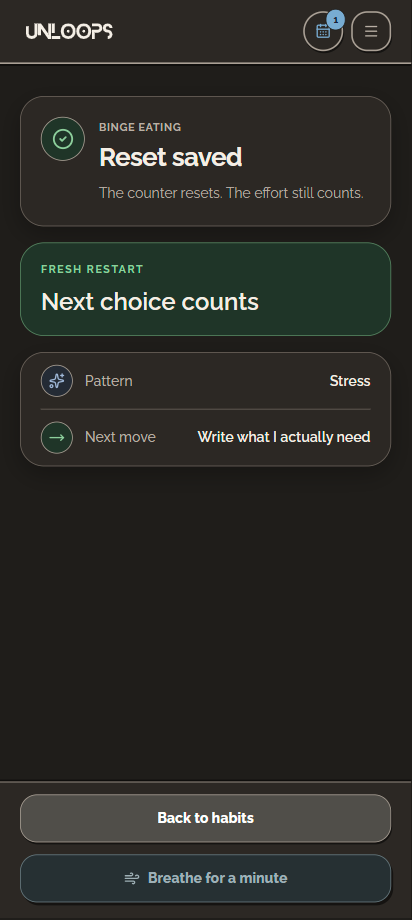
A short reflection records the trigger and a next action. The confirmation carries both forward after the counter resets.
The reset ends with something useful to do next.
How the day log keeps this context
From my own experience
Quitzilla helped me track progress. I still needed a way to recognize my triggers and choose a response. I kept familiar reasons, progress, and a diary, then connected them to action.
Each reference matches the same visible task. Quitzilla screenshot source.
Reference 01 · Personal reasons
My reasons needed to be available during an urge.
Quitzilla · What I used
Reasons to Quit gives me an editable list of personal motivations.
Unloops · My design decision
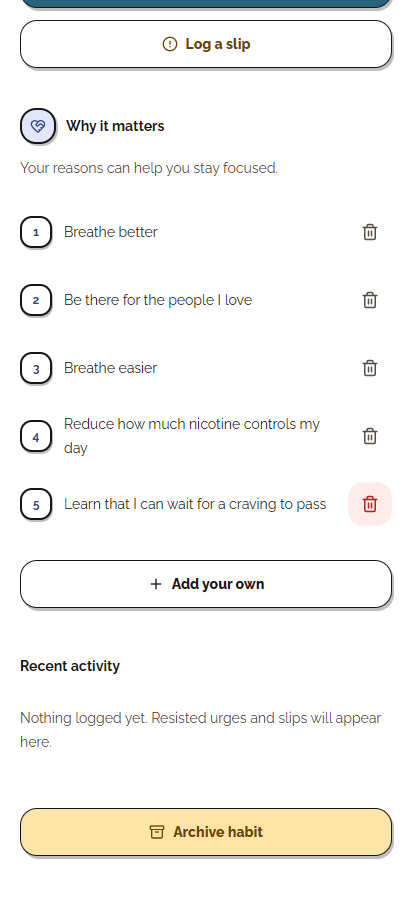
I connected editable reasons to the urge flow, with suggestions and personal additions.
The reason stays close to the next choice.
Tradeoff: Suggestions still need personal editing.
Reference 02 · Access to support
Checking progress was already part of my routine. I made it the entry point to support.
Quitzilla · What I used
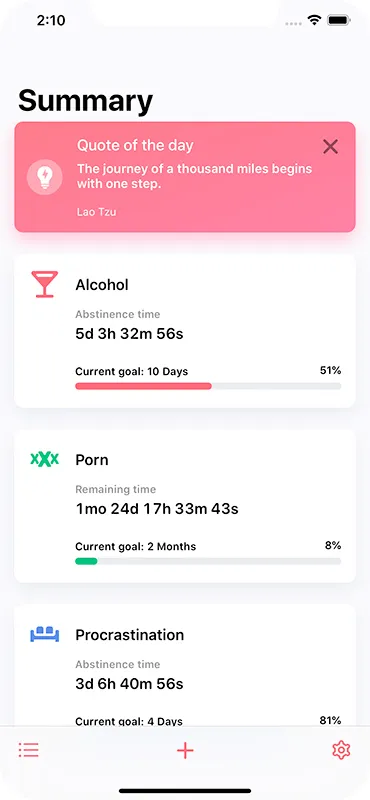
The summary shows time without a habit, its current goal, and progress towards that goal.
Unloops · My design decision
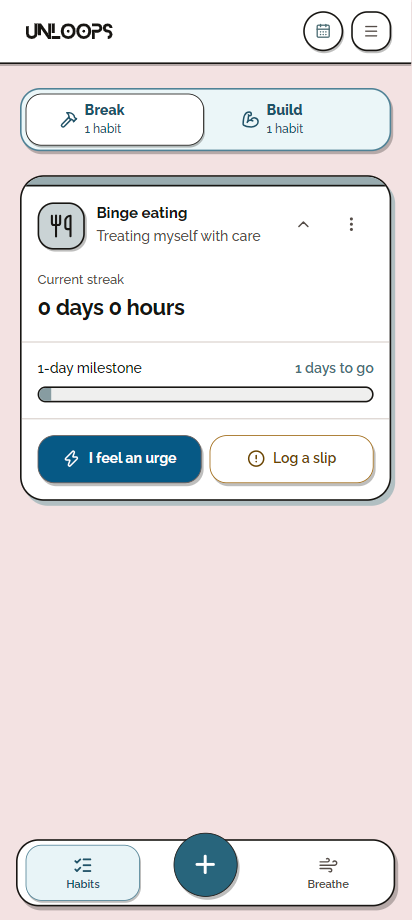
I placed I feel an urge and Log a slip directly below progress, opening the pause and reflection flows.
Support starts where I already check my habit.
Tradeoff: The expanded card takes more space.
Reference 03 · Reviewing a day
I wanted to revisit the trigger and response, even after starting again.
Quitzilla · What I used
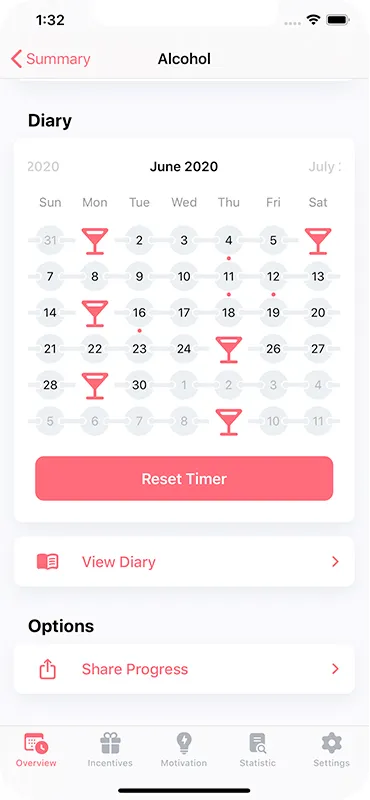
The Diary marks events by day and provides a Reset Timer action.
Unloops · My design decision
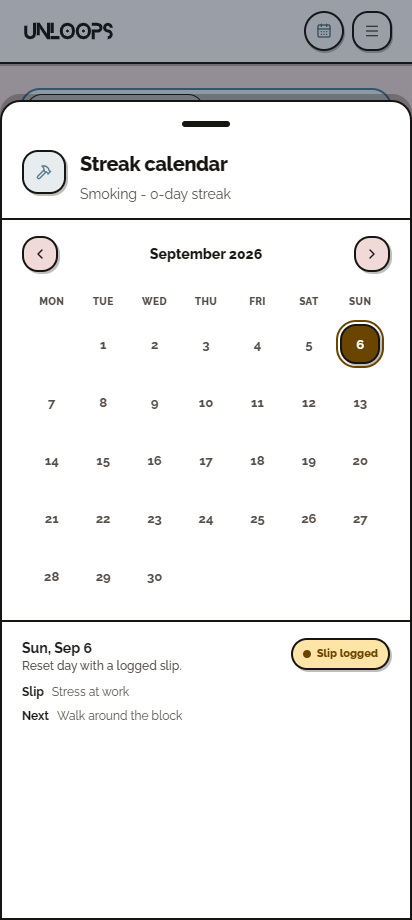
Selecting a day reveals the trigger and chosen next action recorded during reflection.
A past setback can inform the next plan.
Tradeoff: Useful context depends on what I choose to log.
Separate demonstration session from the reflection screenshots.
Supporting routines
Small first steps and simple check-ins support the habits I want to build.
Starting small
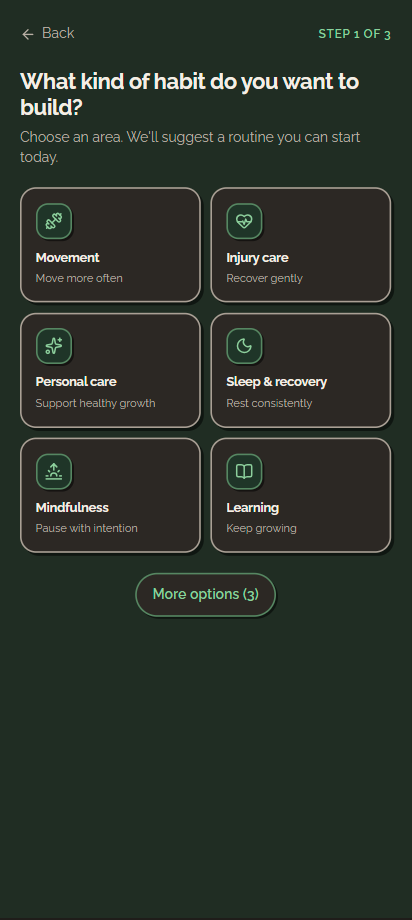
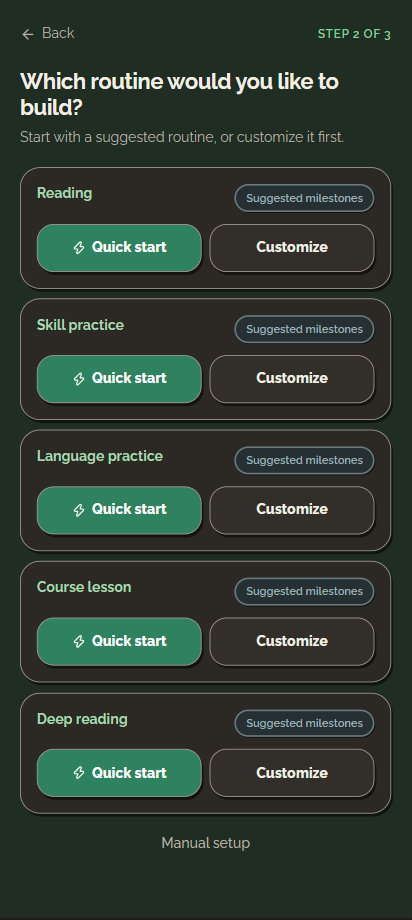
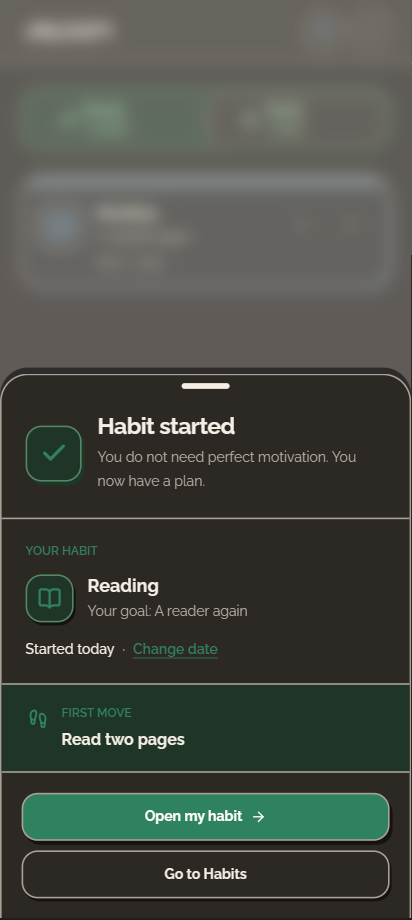
A new routine needed a small, concrete beginning.
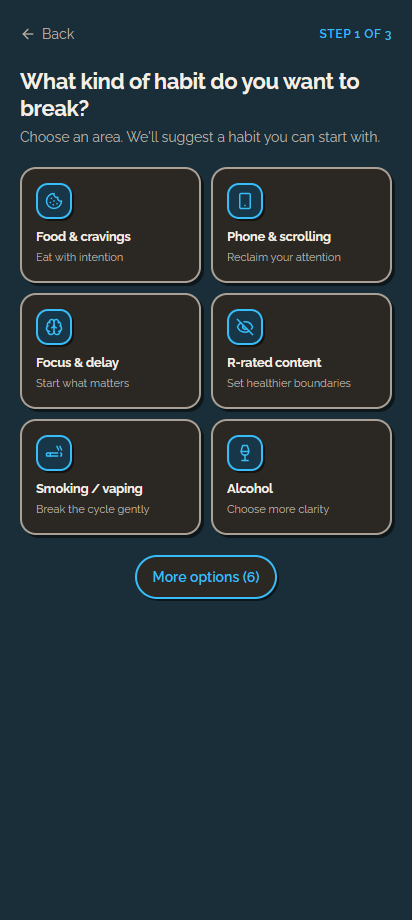
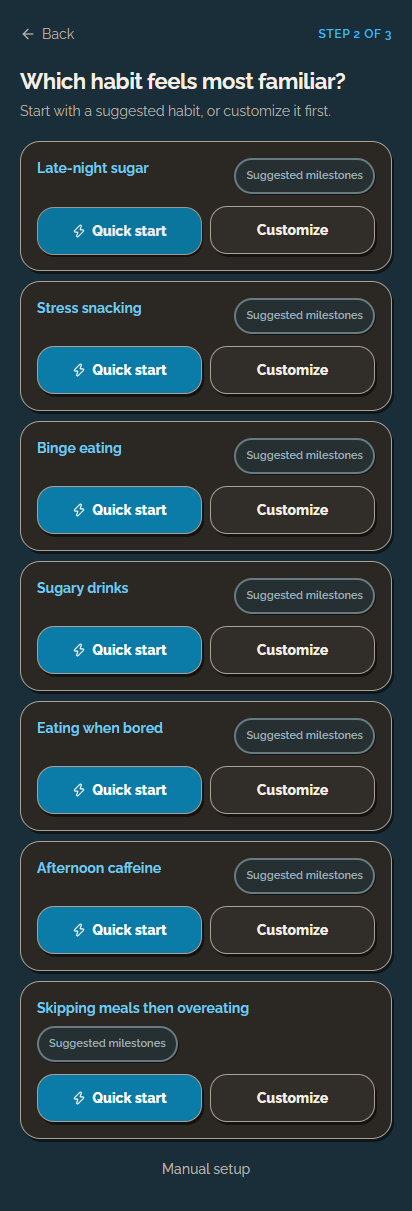
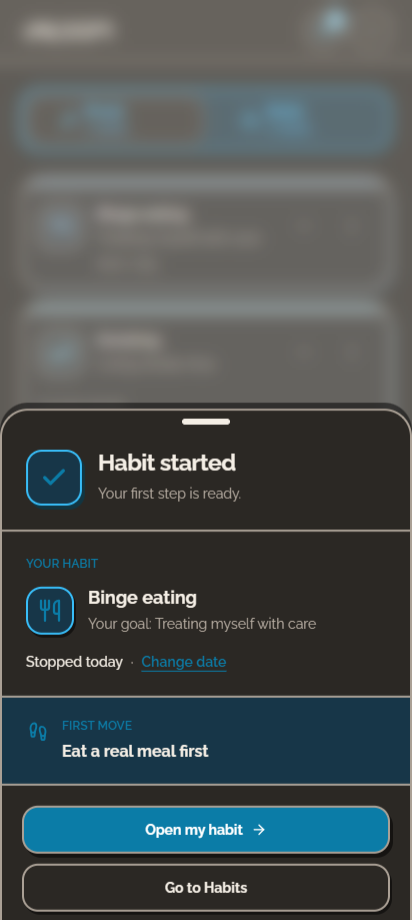
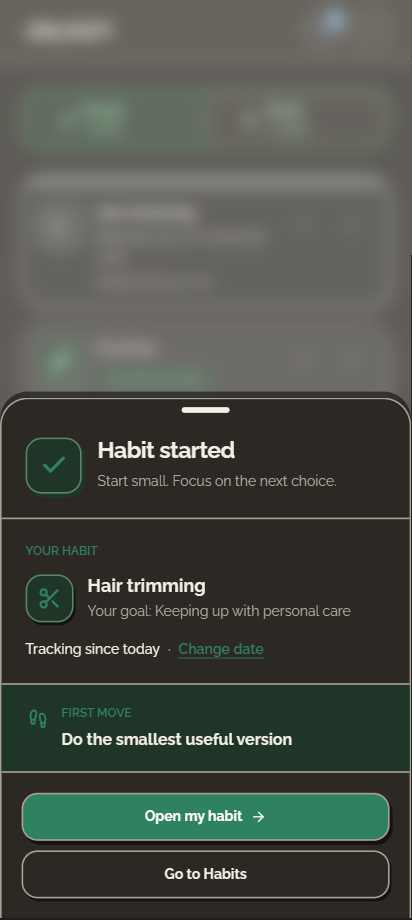
Quick start moves from an area to a suggested habit, then confirms the first action.
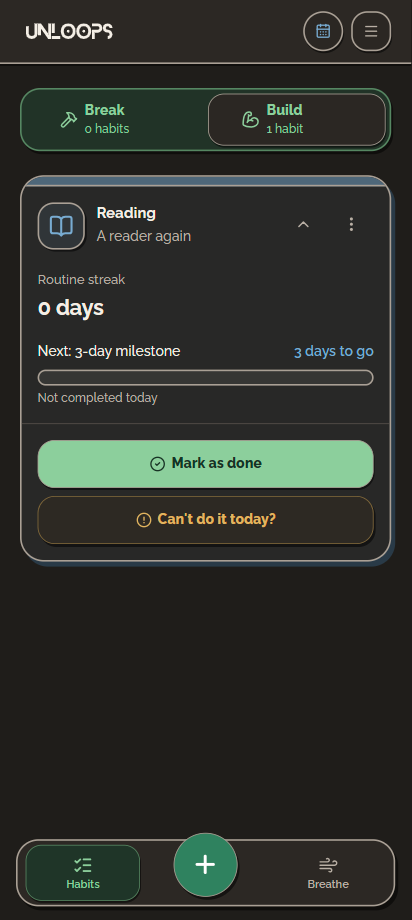
Read two pages gives a reading goal somewhere to start.
Everyday routines
Daily routines and occasional care need different records.
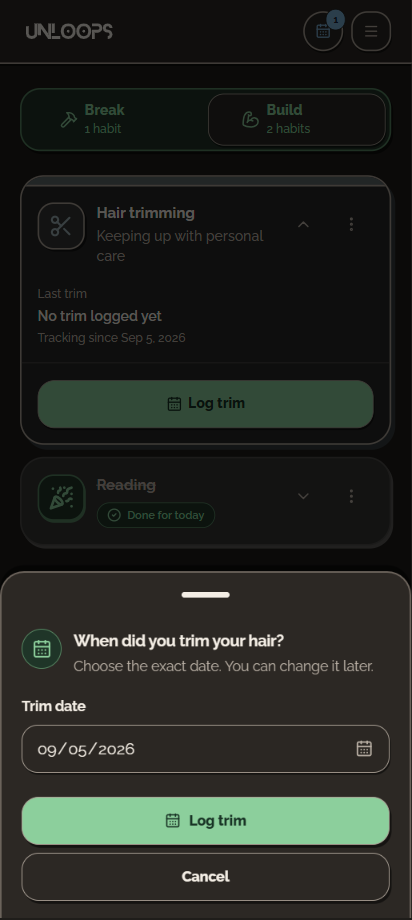
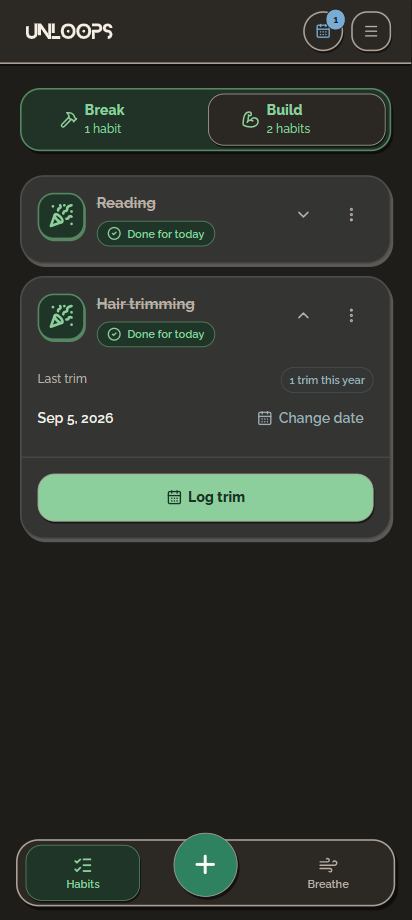
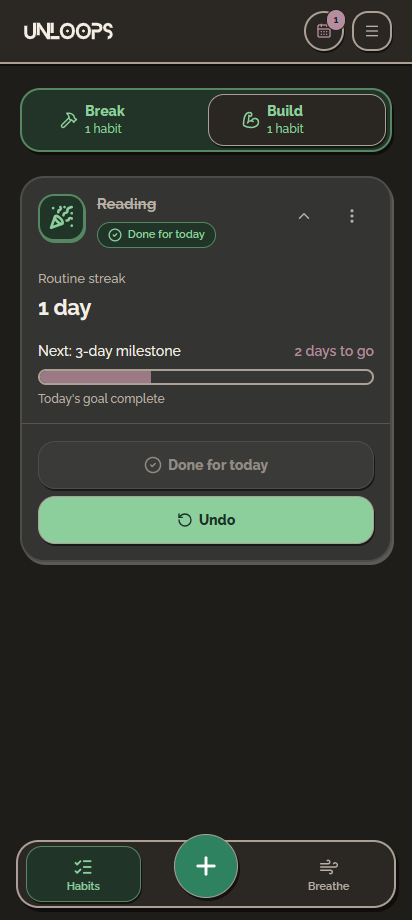
Build offers a daily completion action or an event date, using the same card structure.
Mark reading done today, or record when a hair trim happened.

Visual design and language
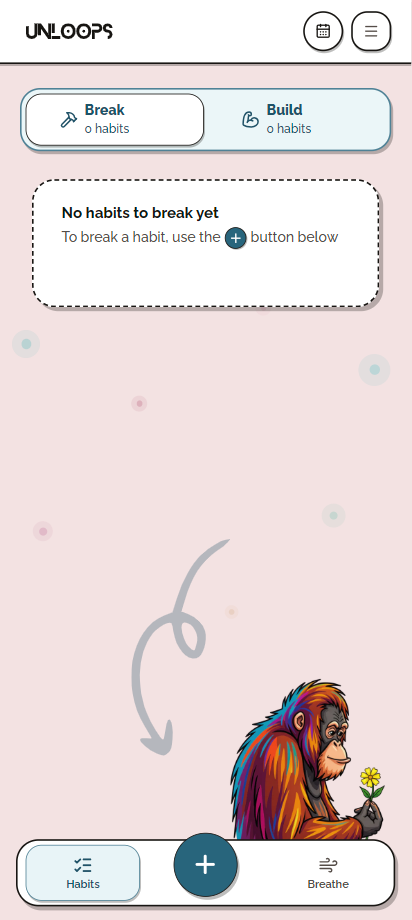
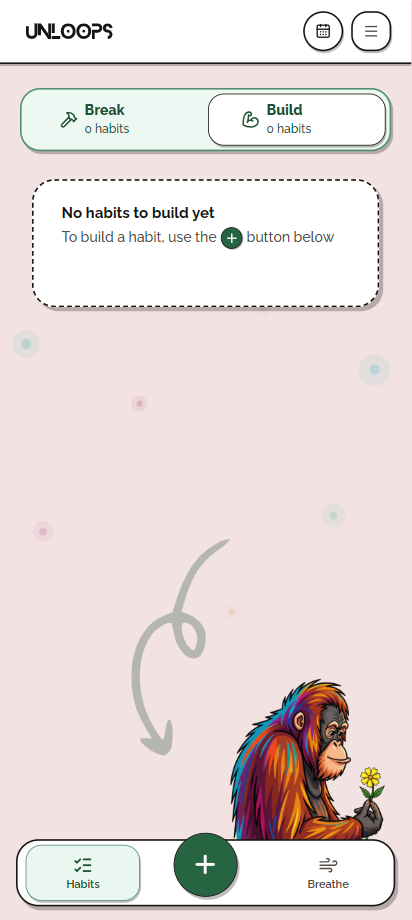
Neo-brutalism is one of my favorite visual styles. I used bold outlines, solid color, and offset shadows to make controls distinct.
With ADHD in mind, I prioritized clear grouping, predictable placement, and an obvious next action.
The app’s illustrations were drawn by an illustrator and are not AI-generated.
Outcome
Unloops is live as a progressive web app (PWA), connecting a trigger plan, a guided pause, and reflection. I can choose a next action and revisit the context later.
I developed the app with AI assistance, including IndexedDB for local storage. I also built the Postgres backend with support from a full-stack developer.
I tested the app myself and with friends, which led to support for Polish, English, Portuguese, and Turkish.
Explore Unloops ↗What I learned
Preparation, action, and reflection ask for different levels of attention. Separating them gave each moment a clear purpose.
I’m continuing to test and refine the app in preparation for release on Google Play.
Unloops is open source, and I plan to use community feature requests to guide future iterations.